
Highlights
“Inflation remained elevated on a year-over-year basis, with energy prices remaining a significant contributor to inflation“
Summary
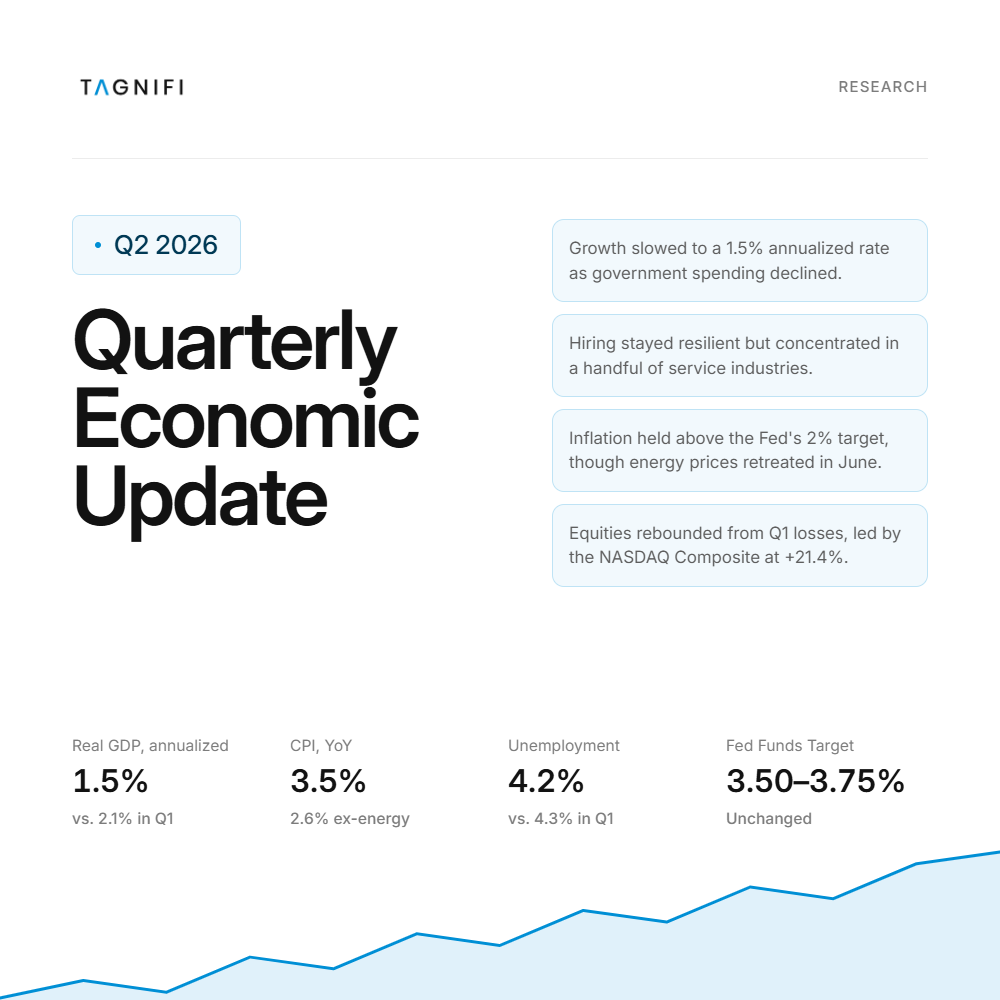
The U.S. economy continued to expand in the second quarter of 2026, although growth slowed compared to the first quarter. The labor market remained resilient, inflation stayed above the Federal Reserve’s target despite easing late in the quarter, and the Federal Reserve left its benchmark interest rate unchanged while maintaining a cautious, data-dependent policy stance.
Real GDP increased at an annualized rate of 1.5% during the quarter. Consumer spending remained the primary driver of growth, supported by robust business investment and exports, while stronger imports partially offset those gains in the GDP calculation. In contrast, government spending weighed on overall economic growth after rebounding sharply in the first quarter following the fourth-quarter 2025 government shutdown.
Inflation remained elevated on a year-over-year basis, with energy prices remaining a significant contributor to inflation. In June, however, the Consumer Price Index declined from the prior month as gasoline and fuel oil prices retreated. Crude oil prices also fell sharply over the quarter despite continued geopolitical tensions in the Middle East.
Labor market conditions changed little during the quarter. The unemployment rate declined modestly to 4.2% in June. However, hiring remained concentrated in a handful of service industries, including professional and business services, health care, and social assistance, with employment showing little change across most other major sectors.
Financial markets rebounded strongly from the first-quarter losses. Technology stocks led the recovery, with the tech-heavy NASDAQ Composite and NASDAQ-100 posting the strongest quarterly gains among the major U.S. equity indexes. The S&P 500 and Dow Jones Industrial Average also recorded solid advances. The Dow Jones Utilities Average was the only major index among those analyzed to post a modest quarterly decline.
Housing market conditions remained mixed during the second quarter. The S&P CoreLogic Case-Shiller 20-City Home Price Index was essentially unchanged between February and May 2026 and was 1.6% higher than a year earlier, with price trends varying across metropolitan areas. Housing starts recovered in June following a weak May but ended the quarter 6.2% below their March level. The inventory of existing homes remained slightly above the previous year’s levels.
The Federal Reserve maintained the federal funds target range at 3.50% to 3.75% throughout the quarter. In its June meeting, the Federal Open Market Committee revised its near-term inflation outlook sharply upward and its near-term growth outlook slightly downward. Longer-term inflation projections increased modestly, while longer-term growth projections and short- and long-term unemployment forecasts changed little. The Committee reaffirmed its commitment to achieving maximum employment and 2% inflation, emphasizing that future policy decisions would continue to depend on incoming economic data.